
About The Marquette Method
The Marquette Method can accompany you through regular cycles, breastfeeding, perimenopause, and more. Learn more to see if the Marquette Method is right for you.

The Marquette Method - Something For everyone
About
Developed by Dr. Richard Fehring at Marquette University, the Marquette Method of Natural Family Planning has helped modernize the way women track fertility. It was created with the goal of simplifying the process while maintaining scientific accuracy and reliability.
The Marquette Method uses the Clearblue Fertility Monitor along with a standardized protocol to help determine a woman’s fertile window. Each day, women complete a simple urinary test. By applying the method’s evidence-based guidelines, fertility can be understood within minutes in a clear and objective way.
When used correctly and with the guidance of a certified instructor, the Marquette Method has been shown in multiple studies to be 98–99% effective in avoiding pregnancy. It is one of the few natural family planning methods supported by multiple efficacy studies.
The method includes tailored protocols for a variety of life stages, including regular cycles, short and long cycles, postpartum, breastfeeding, perimenopause, and more. Additional fertility biomarkers may also be incorporated when needed to provide further clarity.
Overall, the development of the Marquette Method has provided women with a simple, objective, and research-based approach to identifying the fertile window. It offers a modern and reliable option for women in all phases of life.
commitments to learn the Marquette Method
Learning the Marquette Method is straightforward and does not take long. In our first meeting, we will cover everything you need to confidently get started, including your personal history, the basics of natural family planning, and the specific protocols you will follow. This initial session lasts approximately one hour, after which you will be ready to begin charting.
Follow-up appointments are used to review your charts and assess how the Marquette Method is working for you. These visits become shorter over time as you grow more comfortable and independent with the method. In total, your time commitment includes about one hour for initial instruction, along with a few brief follow-ups.
Day-to-day use of the method is also simple and efficient. Each morning, you collect a urine sample and complete a quick test. Results are available in about five minutes. You then record your reading, reference the protocols, and have a clear understanding of your fertility for the day—allowing you to move on with confidence until your next test.

The Clearblue Fertility Monitor
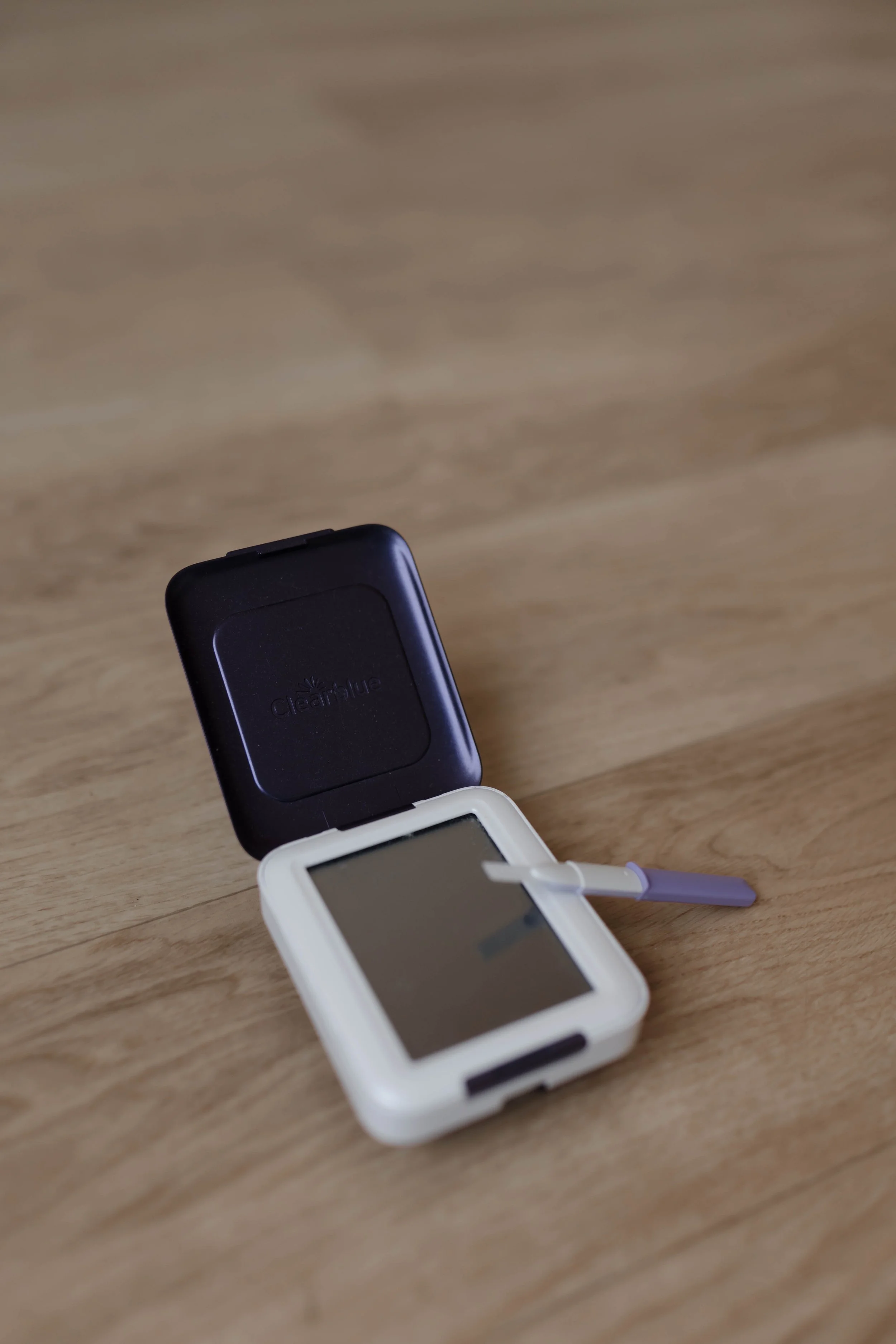
The Clearblue Fertility Monitor tracks a woman’s urinary biomarkers - estrogen and luteinizing hormone. Women perform a once-daily urinary test with a Clearblue test stick and insert it into the test slot on the monitor in order to check their reproductive hormones. Within 5 minutes, the monitor will provide a reading. The monitor has been validated by an independent ultrasound study, so you know it works!

Abstinence with the Marquette Method

Natural family planning requires periodic abstinence during the fertile window for those who are avoiding pregnancy. For some couples, this can feel daunting, and it is natural to wonder how much abstinence to expect.
The Clearblue Fertility Monitor allows us to identify the LH surge, which is one of the most direct at-home indicators of impending ovulation. In general, the more precisely ovulation can be identified, the fewer days of abstinence are typically needed.
For women with regular cycles who are experienced with the method, the average abstinence window is approximately 11–12 days per cycle. New users may experience more days of abstinence initially, as we gather cycle data and learn your individual patterns. For this reason, I often encourage engaged couples to begin charting about six months prior to their wedding.
While women are biologically fertile for about six days each cycle, NFP must account for variability in ovulation timing, which can extend the identified fertile window.
The postpartum and breastfeeding period can be a more challenging season for NFP users. However, many women charting with the Marquette Method find that they still have more days available for intimacy compared to other methods during this time.
While I cannot promise that every cycle will feel simple or straightforward, I can promise that you will not be alone in the process. I will walk alongside you with patience and care, offering steady support, guidance, and encouragement as you learn and navigate each stage.